· 2 min read
How to Plan a Replacement-Only Makeup No Buy
Set replacement-only makeup rules around genuine needs and existing backups. Define categories, exceptions and a simple replacement checklist before buying.
By Vannie
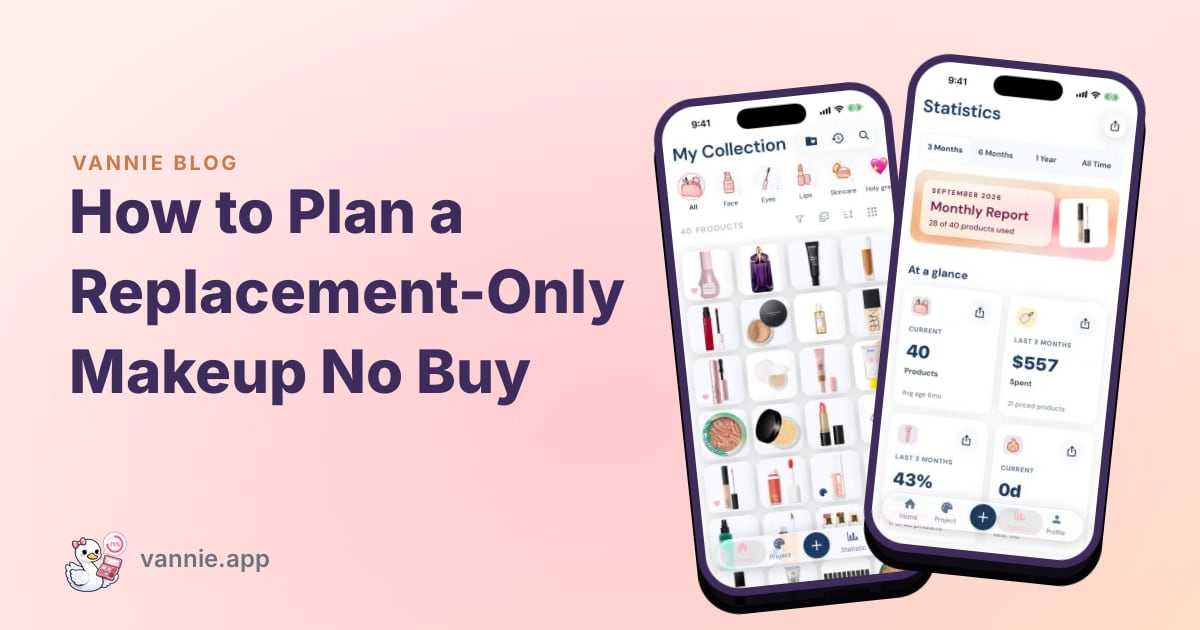
A replacement-only makeup no-buy allows purchases when you need to replace a product, while pausing extra additions. The key is deciding what counts as a replacement before you face a tempting sale.
Check your category and existing alternatives, not just whether one item has run out. Finishing a lipstick does not necessarily create a need for another when you have several you enjoy.
Define the category boundaries
Write down the categories included in your pause. Makeup, skincare and tools can have different rules because their roles in your routine may differ.
Then decide how specific a category should be. Replacing your only suitable foundation is different from replacing every individual shade you finish.
Keep the categories practical. If you define them so narrowly that every new finish becomes a new “need,” the rule may no longer serve its purpose.
Count open products and backups
Make a short inventory of each category you plan to buy from. Include sealed backups, travel items and products stored elsewhere.
Distinguish an actual replacement from opening an existing backup. The backup is already a resource you own; using it does not require another purchase behind it.
Do not open a sealed product merely to confirm it exists. Record its identity and status while keeping the packaging intact.
Use a replacement checklist
Before buying, ask:
- What function in my routine needs replacing?
- Do I already own a suitable product for that function?
- Is there an unopened backup?
- Would I still choose this purchase without the sale?
- Does the size fit my actual pace of use?
- Have I checked the current price and terms?
If you cannot identify the missing function, the purchase may be an optional addition rather than a replacement.
Make room for genuine exceptions
A replacement rule should not require continuing with an unsuitable product. If a shade no longer works for you or a product is not comfortable to use, record that clearly.
Decide how you will handle these situations rather than treating every exception as failure. “No suitable product available for my current routine” can be a reasonable criterion.
Follow manufacturer instructions and product-care information. Using something up is not more important than making an appropriate decision about it.
Choose your timing rule
Some people wait until a product is finished. Others buy close to finishing when delivery times or availability make that practical.
Choose a rule that limits unnecessary stock while fitting your real routine. A replacement should not automatically trigger another backup purchase.
In an illustrative example, you finish one foundation but already own a suitable unopened bottle. Your next step is to use the backup, not restore the backup count immediately.
Keep the useful evidence
When a product is finished, note whether you would choose the same formula, shade and size again. Check the empties record before repurchasing from habit.
At your review, look at what stayed unopened, what you replaced and whether your exceptions were clear. Change the rule if it is not serving the reason you started.
Vannie helps you keep your makeup inventory, usage and empties together. Get Vannie for iPhone or Android and check the category before making your next replacement purchase.
A replacement-only plan works best when the decision is grounded in what you own now, rather than the idea of what your collection should contain.