· 3 min read
Makeup No Buy vs Low Buy: How to Choose Your Rules
Compare makeup no-buy and low-buy approaches. Set clear categories, exceptions and review points that fit your existing collection and buying goals.
By Vannie
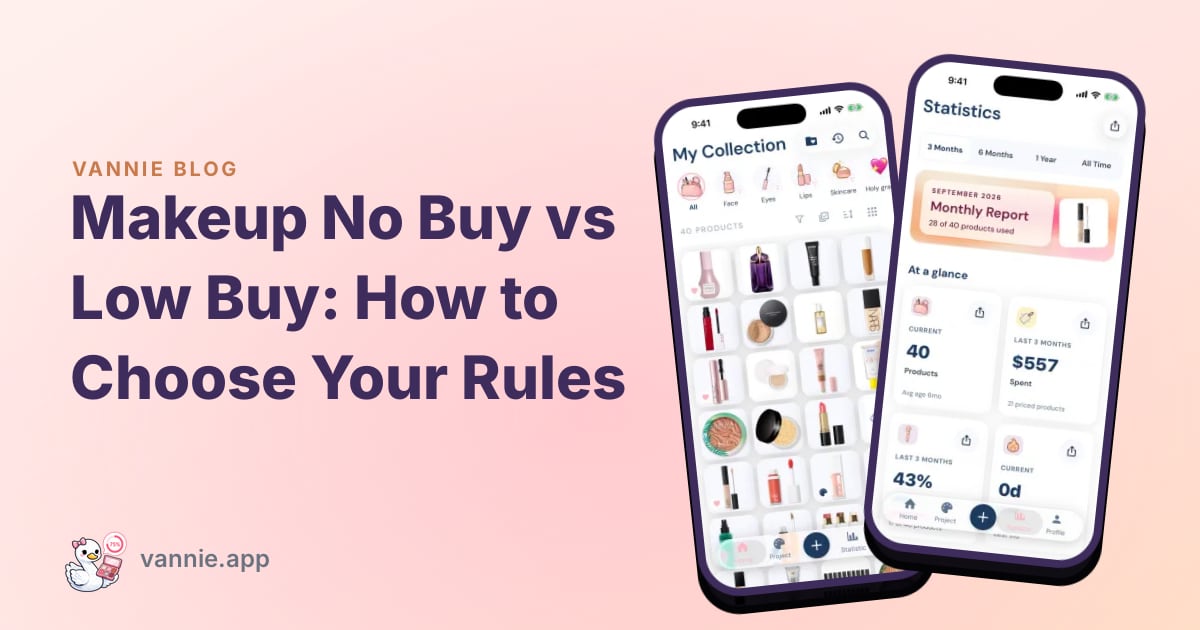
A makeup no-buy pauses purchases within categories you define. A low-buy allows purchases within limits you choose. Both can help you pay closer attention to what you already own, but they need clear rules to be useful.
Choose around your reason for starting. You may want to reduce duplicate purchases, use existing backups or understand which products you actually enjoy.
What a no-buy can mean
A no-buy might pause all optional makeup purchases for a period. Another version may cover only a crowded category, such as lip products.
Decide what happens with genuinely needed replacements, gifts and products outside the chosen category. There is no single community rule that answers those questions for everyone.
A no-buy does not require wearing more makeup to empty your collection faster. It can simply create space to use what already fits your routine.
What a low-buy can mean
A low-buy permits purchases within a stated boundary. The limit might be a spending allocation, a small number of items or buying only after an existing category meets a condition.
Choose a boundary you can measure. “Buy less” is hard to review; “check my inventory before buying any blush” gives you a specific action.
Avoid combining several complicated rules unless you know they help. A system you cannot explain may be hard to follow consistently.
Compare the approaches
| Question | No-buy approach | Low-buy approach |
|---|---|---|
| Optional purchases | Paused in defined categories | Allowed within chosen limits |
| Main decision | Is this an agreed exception? | Does this fit my limit and priorities? |
| Useful record | Inventory and exceptions | Inventory, spending and purchases |
| Review point | Check the pause and its purpose | Check whether the limits worked |
Neither approach guarantees savings or a particular result. Your actual buying choices determine what happens.
Start with a collection check
Look at products you already have open and any sealed backups. Note categories where you regularly buy similar items.
You might discover that a broad ban is unnecessary but a pause on one category would be useful. Or you may prefer the clarity of pausing optional purchases for a short period.
Use the inventory as information. The number of products you own does not need to become a judgment about you.
Write rules for predictable situations
Decide how to handle a favourite product running out, a gift card, a sale and a purchase you later return.
Keep exceptions specific. “Replacing my only suitable everyday foundation” is clearer than “anything that feels essential.”
A gift card may reduce cash outlay while still adding products to your collection. Record both aspects if your goal includes reducing the number of items.
Review without restarting everything
If a purchase falls outside your rules, record what happened and continue. You do not need to erase the month or buy more because the challenge is no longer perfect.
Ask whether the rule was unclear, too broad or unrelated to the situation that caused the purchase. Adjust deliberately and keep the change visible.
Vannie can help you see your collection, purchases and actual usage while you follow the rules you choose. Get Vannie on iOS or Android and begin with a category you want to understand better.
If you prefer replacements as your main exception, a replacement-only approach gives that decision a more specific structure.