· 3 min read
Your Monthly Makeup Collection Review: Usage, Empties and Spending
Review your makeup collection each month with a practical worksheet for purchases, usage, empties, backups and next month's goals.
By Vannie
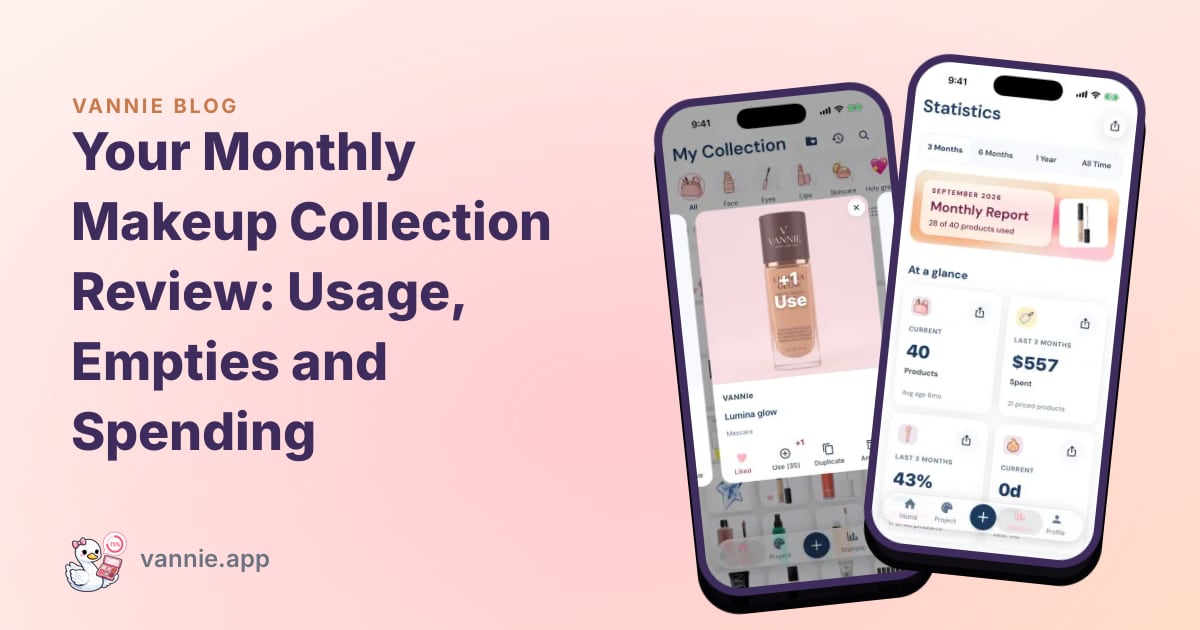
A monthly makeup collection review connects what you bought with what you actually used. Look at purchases, usage, empties and the products still waiting for attention, then choose a small next step.
The review does not need to grade the month. Its purpose is to make the next month's decisions clearer.
Check changes to your collection
Begin with the number of items you owned at the start and the items that entered or left. Keep purchases, gifts, finished items and other removals distinguishable.
Use a simple reconciliation:
Closing item count = opening count + items added − items finished − other items removed
In an illustrative example, 42 starting items plus three additions, minus two empties and one other removal, leaves 42 items. The count stayed the same, but the collection changed.
If your totals do not match, check for a missing purchase, a duplicate entry or a product whose status was not updated.
Review spending separately
Add actual payments within the month, using a consistent currency approach. Note refunds and set allocations clearly.
Do not confuse this total with the purchase value of products currently owned. An older product can still be in the inventory without creating new spending this month.
A product finished during the month does not return its purchase price to your budget. Empties and spending belong in the same review because they add context, not because they cancel each other out.
Look at what received attention
Review your most-used products and items you had planned to use but did not. Consider why the patterns occurred.
A quiet makeup month, a holiday or a change in routine can explain low counts. If you only tracked part of the month, note that before comparing it with a complete month.
Choose a neglected item to revisit only if you still want to use it. A low count is information, not an instruction.
Read your empties notes
For each finished product, review the formula, shade, size and repurchase opinion. Check whether a suitable backup is already available.
Notice any repeated pattern. You might prefer smaller formats, repeatedly finish the same type of product or buy alternatives you rarely use.
Keep declutters and returns visible as separate outcomes. They can teach you something about buying without being presented as products you finished.
Use a short review worksheet
| Question | Your note for this month |
|---|---|
| What entered the collection? | Purchases, gifts and other additions |
| What left? | Empties and other removals separately |
| What did I spend? | Actual payments and refunds |
| What did I use most? | Products plus relevant context |
| What did I learn? | One useful preference or pattern |
| What comes next? | One to three practical actions |
You can answer in sentences rather than building an elaborate dashboard. Missing information can become a note for improving next month's tracking.
Set the next month's priorities
Choose actions you can control: record newly opened products, check backups before shopping, revisit a lipstick or continue a manageable Project Pan.
Do not automatically increase every target. The next plan should fit your expected routine and what you learned.
Vannie brings collection records, usage, spending information and empties together to support this review. Get Vannie for iPhone or Android and start with the data you already have.
A useful monthly review ends with a clear decision you can remember, not a longer list of obligations.