· 3 min read
How to Calculate the Value of Your Makeup Collection
Calculate makeup collection value using actual purchase cost or replacement prices. Handle gifts, sets, currencies and finished products without double counting.
By Vannie
To calculate the value of your makeup collection, first choose what “value” means. Actual purchase cost, current replacement cost and possible resale value are different figures.
For personal tracking, actual purchase cost is often the clearest starting point. It shows what you paid for the products you currently own, provided your records are complete.
Choose the question before adding prices
Use actual purchase cost to ask how much you paid for the items still in your collection.
Use replacement cost to estimate what equivalent products would cost to buy now. This requires current prices and does not tell you what you originally spent.
Do not treat either number as guaranteed resale proceeds. Condition, market demand and rules about selling products affect that separate question. This guide is about organising personal records, not providing a market appraisal.
Create a consistent product list
Use one entry per physical item. Include the exact product, shade, size, price paid and currency when you know them.
Decide whether your total includes makeup only or also skincare, fragrance and tools. A category definition helps you compare the figure later.
Keep finished and removed products outside your current-collection total. They can remain in your historical spending records without being counted as products you still own.
Work through an illustrative total
Imagine the following small collection, all bought in Australian dollars:
| Item | Actual price paid |
|---|---|
| Foundation | AUD 45 |
| Blush | AUD 24 |
| Lipstick | AUD 36 |
| Palette | AUD 60 |
| Gifted lip balm | AUD 0 personal outlay |
The recorded personal purchase cost is AUD 165.
The gifted balm still belongs in the inventory. Its zero personal cost does not mean it has no practical or replacement value.
If the foundation's current retail price is different, keep that in a separate field or note rather than quietly replacing the purchase price.
Handle gaps without disguising them
You may not know what you paid for older products. Leave the amount unknown or use an estimate that is clearly labelled.
Report the coverage alongside the total. “Known purchase cost for 40 of 55 items” tells you more than a precise-looking total with 15 silent blanks.
For mixed currencies, keep original amounts and choose a documented conversion approach before combining them. Simply adding currency amounts together does not produce a meaningful total.
Avoid double counting bundles
A set bought for AUD 60 can be recorded as one purchase or allocated across its contents. If you divide it among three items, the allocated costs must add back to AUD 60.
Do not add both the set purchase and all component allocations to the same total.
Likewise, moving a product into an active Project Pan does not make it a new purchase. It is the same item being used in a different way.
Use the result as context
A collection total can help you spot categories that hold a large share of your recorded spending. Pair it with usage and preference notes before deciding what to change.
A high total is not a personal verdict. The useful next step may be checking backups, pausing one category or simply correcting incomplete records.
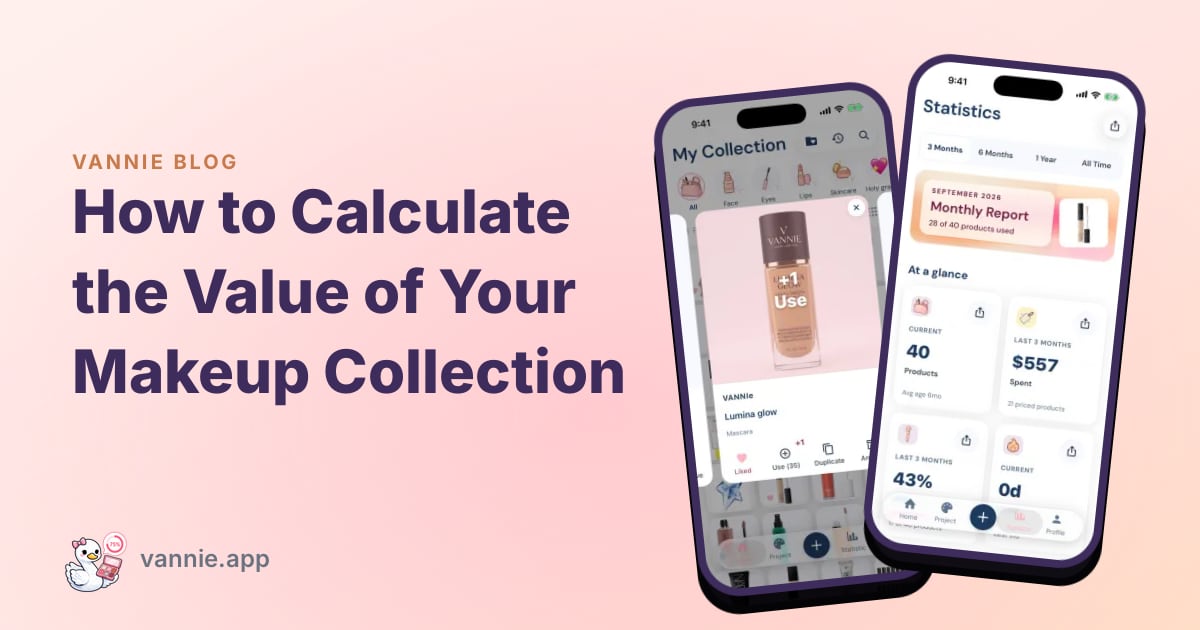
Vannie keeps purchase details with your beauty inventory and connects them with usage and spending information. Get Vannie for iOS or Android, or use the import template if you already have a spreadsheet. Keep your chosen definition of value visible whenever you compare totals.