· 2 min read
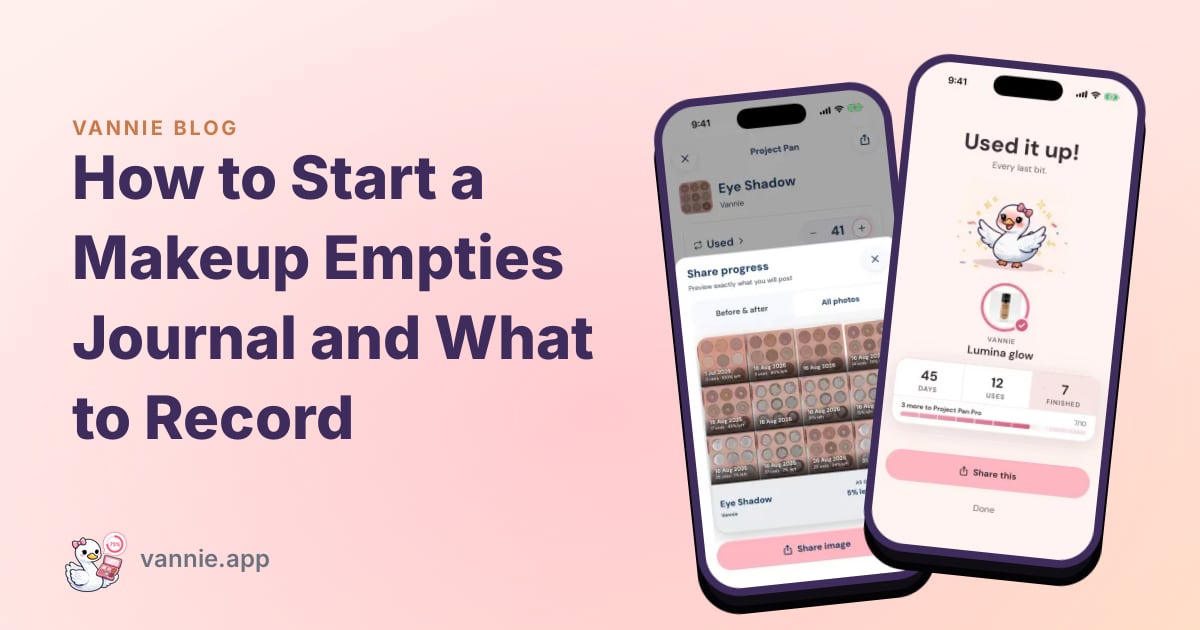
How to Start a Makeup Empties Journal and What to Record
Start a makeup empties journal with finish dates, usage context and honest repurchase notes. Keep finished products distinct from declutters and returns.
By Vannie
A makeup empties journal records what you finished and what you learned from using it. The most useful entry is not just a photograph of an empty container. It helps you decide whether you would choose that product, size and price again.
You can keep the journal in a notebook, spreadsheet or makeup tracker. Begin with your next finished item rather than reconstructing every product you have ever used.
Decide what counts as an empty
Use a clear definition, such as finished through normal use with no practically accessible product left. You do not need to dismantle packaging or scrape it in a way the manufacturer does not recommend.
Keep visible pan separate from a fully finished product. Hitting the bottom of a powder is a milestone, but there may still be product around the edges.
Returns, discards and gifts to someone else are other departures. Record them separately instead of counting everything removed as an empty.
Capture a small set of details
For each finished product, note:
- Product and exact shade.
- Size or version.
- Finish date.
- Opened date if known.
- Recorded uses, if you tracked them.
- What worked and what did not.
- Whether you would buy it again.
A short record completed while the experience is fresh is more valuable than an elaborate entry you keep postponing.
If the usage history is incomplete, say so. “Tracked for the final month” is a useful qualification.
Write a specific repurchase verdict
Replace “loved it” with an observation you could use in a shop. For example: “The shade worked, but the full size was more than I needed,” or “Easy to use on workdays; would choose the same finish again.”
You can separate the verdict into formula, shade, size and price. You might enjoy the formula but prefer a different shade, or repurchase only when your current alternatives are used.
“Would repurchase” does not mean “buy immediately.” Check the products and backups you already own.
Understand what an empties total means
Counting empties shows finished items, but product sizes make totals difficult to compare. A sample and a full-size foundation are both one item.
If you add prices, describe the figure clearly. The purchase cost of finished products is not money earned back, and a retail-value total is not your actual cash spending.
Keep gifts, samples and paid purchases distinguishable if those differences matter to your review.
Turn the journal into a useful monthly review
Look for repeated patterns. Are you finishing minis but buying only large sizes? Do the products you would repurchase share a particular finish or application style?
Notice the products that never reach the empties page as well. Your inventory may reveal several open alternatives serving the same purpose.
Choose one decision for the next month, such as using an existing backup or postponing a repurchase until you need it.
Keep the memory without keeping every container
A photograph and a clear record can preserve the useful information. Follow local disposal instructions for the packaging and any remaining contents; requirements differ.
Vannie lets you mark empties and keep usage history with your collection. Get Vannie on iOS or Android and record your next finished product with one practical note for your future self.
For a wider view of what changed, pair your empties journal with a monthly check of purchases, current products and panning goals.