· 3 min read
How to Create a Skincare Inventory and Track Open Products
Create a skincare inventory that distinguishes open products and sealed backups. Record names, sizes, purchase details and label instructions in one place.
By Vannie
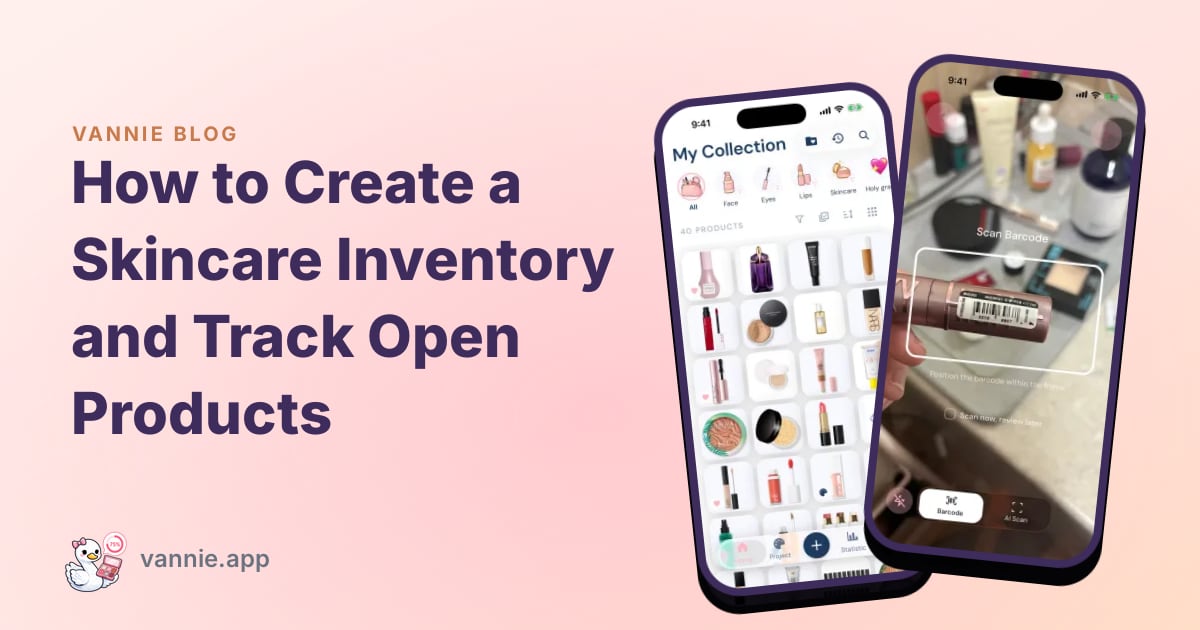
A skincare inventory should make open products and sealed backups easy to distinguish. Begin with the items in your current routine, then add the products waiting in drawers, bags and cupboards.
You do not need to design a new skincare routine to organise your collection. The first job is remembering what you own and which item you are using.
Start with current products
Gather the products you use regularly. Record the exact product name, version and size so similar packaging does not create confusion.
Choose simple categories such as cleanser, moisturiser and other product types relevant to your collection. Keep category labels descriptive rather than using them to prescribe a routine.
If a product was recommended for a specific purpose by a qualified professional, preserve those instructions separately and follow them. An inventory is not a substitute for personal advice.
Identify open items and backups
Record each physical item separately when opening dates or status differ. Two identical bottles may be one open product and one backup.
Keep sealed items sealed until you intend to use them according to their instructions. An inventory does not need a photograph of the contents.
For a set, make sure you can identify the individual products without counting the full set and every component twice in the same purchase total.
Keep the useful details together
| Detail | Why it matters |
|---|---|
| Exact product and version | Distinguishes similar packaging |
| Size | Separates minis and full sizes |
| Open or unopened status | Shows what is currently in use |
| Opened date when known | Preserves the start of use |
| Printed instructions and dates | Keeps product-specific information |
| Purchase cost and currency | Adds spending context |
| Personal notes | Records preferences and practical observations |
Leave unknown dates unknown. An accurate partial record is better than an exact-looking but invented history.
Keep routine records distinct from recommendations
You can note when you normally use a product or why it is in your collection. That describes your behaviour; it does not establish that the combination is suitable for someone else.
Avoid adding products merely because your inventory has an empty category. A blank row is not a skincare need.
This guide does not recommend ingredients, treatment combinations or usage frequencies. Follow product instructions and seek qualified advice for personal concerns.
Use the inventory before restocking
When something is running low, check whether a suitable backup already exists. Confirm the exact version and size rather than buying from memory.
Also check what you thought of the current product. A note about packaging convenience or personal preference can be more useful than an automatic repeat order.
Keep a finished-product record if it helps you choose future purchases. A product you finish and one you remove for another reason should remain distinct.
Make maintenance part of opening a product
When you open something new, record the date and the label information you want to preserve. When it is finished, update the status before adding a replacement.
Periodically compare your active records with the products you can see in your usual storage area. Focus on changes rather than recounting every untouched backup.
Vannie includes skincare alongside makeup categories, with product details, usage records and opening information. Get Vannie for iOS or Android or import an existing spreadsheet to keep the collection in one place.
Begin with the products you already use. Organising them can make future decisions easier without turning the inventory into another routine you have to follow.